
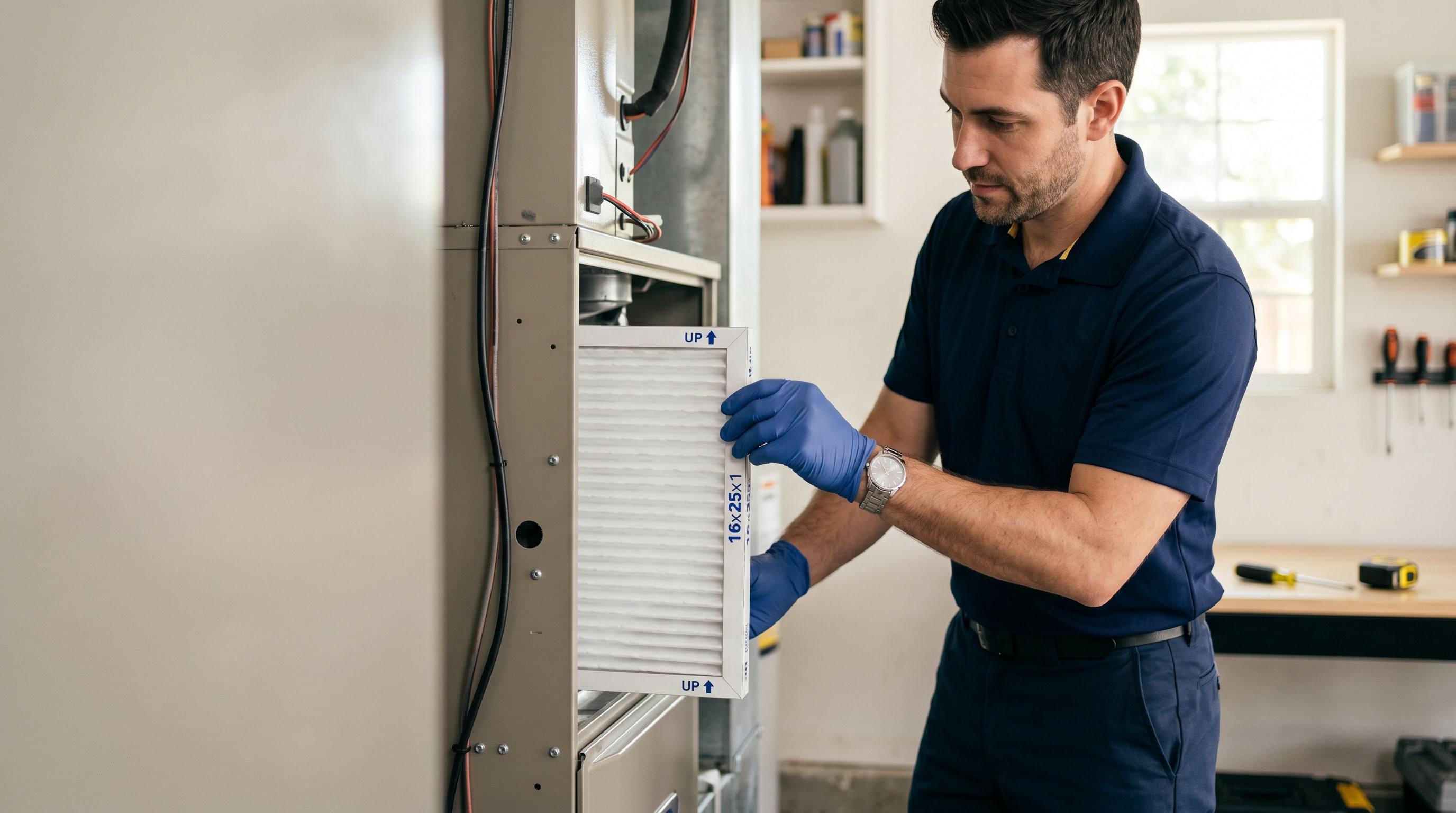
Where neglected maintenance actually bites
Skipped maintenance doesn’t fail evenly — it concentrates in two places. The first is lifespan: a regularly maintained 16 SEER central AC averages 16–20 years of useful life in SoCal, while a neglected one averages 10–13. The second is timing: the failures cluster at the worst possible moment, on the first 100°F afternoon or the first cold night, because that is when an idle system gets asked to run hard for the first time in months. Most of what we find on a tune-up is drift, not breakage — a capacitor down 30% from nameplate, a coil losing capacity to grime, a flame sensor caked with months of dust. Caught in the slow season, those are small line items. Caught during a heat dome, they are emergency calls.
What a tune-up covers
A real tune-up is 60–120 minutes of measurement, cleaning, and documentation, and every reading goes on the written invoice. The cooling side and heating side check different things:
- Cooling side (AC and heat-pump cooling): condenser-coil cleaning, capacitor microfarad against nameplate spec, contactor inspection, manifold high/low pressures with superheat and subcool, amp draws on compressor, condenser fan, and blower, supply/return temperature differential (target 18–22°F), drain-line clearing, filter check, and blower-wheel inspection. Full list on the AC maintenance page.
- Heating side (gas furnace and heat-pump heating): combustion-analyzer reading (CO, O2, stack temperature, efficiency), heat-exchanger visual for cracks, flame-sensor cleaning, hot-surface-ignitor resistance (45–90 ohms), burner inspection, manifold and inlet gas pressure in inches of water column, high-limit and pressure-switch tests, and condensate-trap clearing on 90%+ units. Full list on the heating maintenance page.
- Documentation: capacitor reading, all amp draws, high/low pressures, superheat and subcool, supply/return delta, gas pressures, and combustion numbers — written down so you can compare year over year. A checkmarked “all good” with no numbers is the tell that the work wasn’t done.
Spring AC, fall heat — why the timing matters
The right time to call is the slow season for that system; the wrong time is during an active weather event. The difference is a same-week appointment versus a 5–7 day wait at an after-hours rate.
- April–May for AC. The equipment has been idle since October, readings have drifted over the winter, and you have a 6–8 week buffer before the first 100°F stretch. Background reading: spring AC tune-up timing in Los Angeles.
- October–November for heating. This covers the heating-side prep — flame sensor, ignitor, heat exchanger, control board — before the first cold snap. Late-October Santa Ana voltage transients knock control-board capacitors offline, so a mid-October visit catches those early. Guide: fall furnace maintenance timing.
- Twice a year for heat pumps and mountain furnaces. Heat pumps run both seasons; mountain installs in Big Bear and the high desert log real heating hours October through May.
Coastal, inland, and desert maintenance differ
The same system ages differently depending on where it sits, and the maintenance interval should follow:
- Coastal (Malibu, Manhattan Beach, the South Bay): salt-laden marine air corrodes aluminum condenser fins faster than inland air. Outdoor coils need cleaning more often, and a 6-month rotation pays off even on a straight AC.
- Desert (Coachella Valley, Palm Springs): wind-driven dust embeds in the fins and can cut heat-transfer efficiency 15–25% within two to three years on uncoated equipment. Annual coil rinses pull the dust before it bonds.
- Inland and valley (Pasadena, the SGV): UV-degraded suction-line insulation is one of the most common findings, and bare suction line quietly costs 5–8% of cooling capacity.
Pricing
Real ranges from our service tickets across all five counties. A scheduled tune-up includes the inspection — there is no separate diagnostic charge on maintenance:
| Service | Typical cost | Time |
|---|---|---|
| Standard residential AC tune-up | $145–$185 | 60–90 min |
| Heat-pump tune-up (cooling + heating side) | $185–$245 | 75–120 min |
| Gas furnace tune-up (80% AFUE) | $145–$185 | 60–120 min |
| Gas furnace tune-up (90%+ condensing) | $185–$245 | 60–120 min |
| Multi-stage / communicating system tune-up | $245–$385 | 90–150 min |
| Diagnostic visit (waived with repair) | $89 / $149 after-hours | 30–60 min |
| Comfort Club Silver (most popular) | $349/year | 2 visits |
| Comfort Club Bronze | $189/year | 1 visit |
| Comfort Club Gold | $599/year | 2 visits |
Plan tiers in full: Bronze ($189/year) is one visit plus a 10% repair discount; Silver ($349/year) is two visits plus a 15% discount, priority scheduling, and a waived diagnostic; Gold ($599/year) is two visits plus a 20% discount, same-day priority dispatch, a 24-hour response guarantee, and a 2-year price lock. Multi-system homes add $150/year per additional system on Silver/Gold. The complete comparison and the savings math live on the Comfort Club membership page.
Where this fits — the maintenance hub
HVAC maintenance is the whole-system habit; the work splits into a cooling side and a heating side, with plans that bundle both:
- AC maintenance and tune-up — the cooling-side service, spring timing, 15-point checklist.
- Heating maintenance and furnace tune-up — the combustion-side service, fall timing, heat-exchanger and CO safety.
- Comfort Club maintenance plans — Bronze / Silver / Gold annual memberships that bundle both seasonal visits.
- Duct cleaning — the usual next step when a blower-wheel inspection flags heavy buildup.
- Indoor air quality — filtration, UV, and ventilation work that rides alongside a maintenance plan.
Why choose Venta for maintenance
CSLB licensed C-20 #1138898. California requires a C-20 license for residential HVAC work. The number is on every invoice, in the footer, and on the side of every truck — verify any contractor at the CSLB License Check (cslb.ca.gov) before scheduling.
Documented readings, not checkmarks. Every Venta tune-up invoice carries actual numbers, which is what makes a tune-up useful 12 months later when you are trying to tell whether a reading has drifted.
No fear-selling. If we find something during the visit, you get the part number, labor estimate, and total on a written quote before any work happens — and we will tell you which findings can wait until next year and which cannot.