
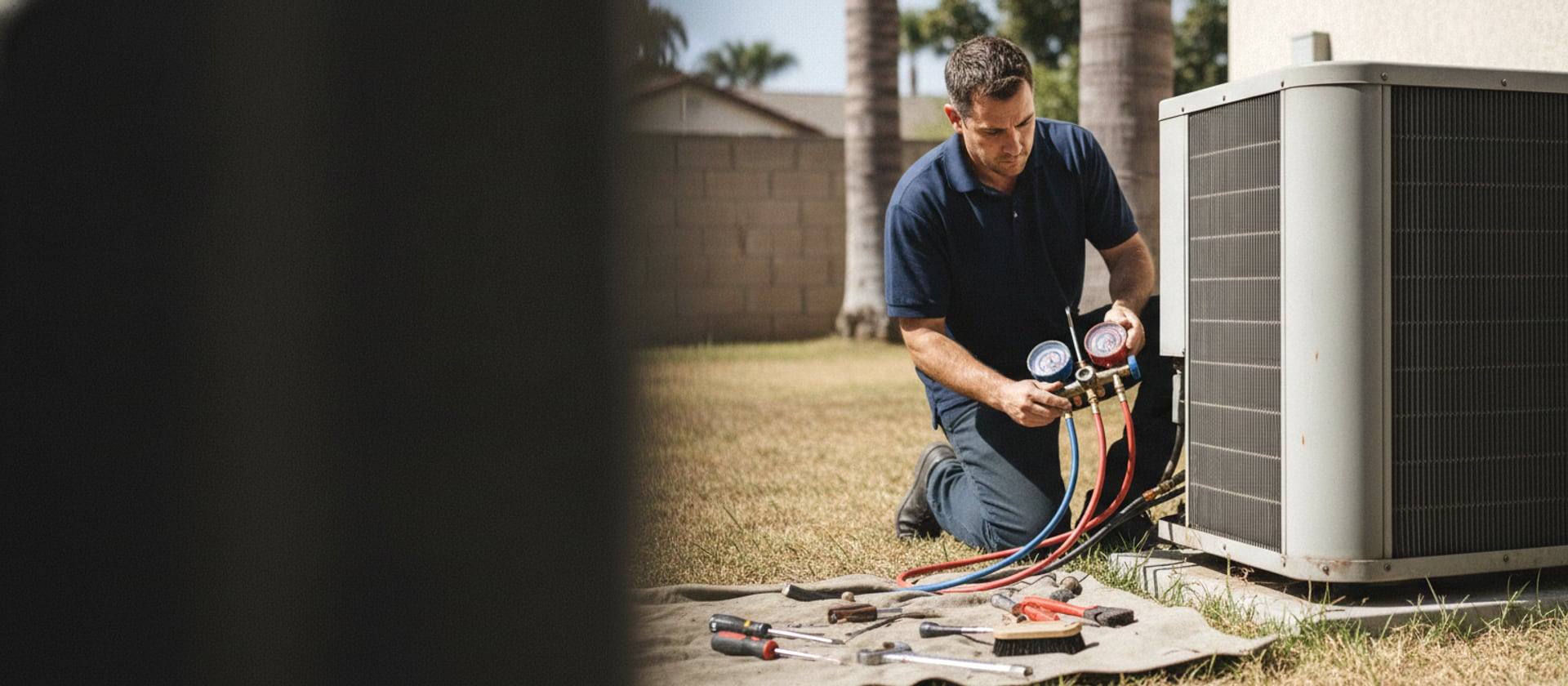
The myth: HVAC maintenance is the same everywhere in California. The reality: a Santa Monica condenser and a Palm Desert condenser need different care, different schedules, and different equipment specs, and the contractor running an identical maintenance checklist on both is wasting your money in one zone and missing the actual problem in the other. I have replaced too many 8-year-old coastal condensers that should have made it to 14, and too many 11-year-old desert compressors that should have made it past 14, to think this is a small distinction.
The way I explain it to homeowners: an AC in Santa Monica is fighting salt and humidity. An AC in Palm Springs is fighting sun and run-time. They are both ACs. They are not the same job. The maintenance plan should not be the same job either. Below is what actually differs by zone, where the money should go, and which "industry standard" tasks I would skip in each zone.
The three SoCal zones that drive 90% of the difference
The CEC has 16 climate zones. For maintenance decisions you need three:
- Coastal: within ~2 miles of the ocean. Beach cities, West LA, El Segundo, the South Bay strip, Long Beach coast, Newport, Huntington. Salt air is the variable that matters.
- Inland basin: mid-LA, San Fernando Valley, SGV, eastern Orange County, central Riverside, San Bernardino. Run-time and Santa Ana dust drive everything.
- Desert / high-heat: Coachella Valley, Palmdale, Lancaster. 2,000+ cooling hours/year and abrasive dust.
Coastal: the salt-and-humidity problem
Two specific battles, neither of which inland equipment fights at all.
Salt-air corrosion. Salt aerosols carried on the ocean breeze land on aluminum fins and copper tubing of outdoor condensers. Within 2 miles of the coast, corrosion runs 3–5x faster than inland. Fin damage reduces heat-transfer area; tube corrosion eventually causes refrigerant leaks. The Carbon Beach replacement I keep coming back to: 8-year-old standard-spec condenser, mechanical compressor still good, but the fins were a chalky white powder and effective heat-transfer area had dropped about 40%. Homeowner was paying for two tons of cooling and getting maybe 1.4 tons. Coastal-spec coil coating from day one would have bought her another four years.
Higher ambient humidity. Coastal averages 60–75% on summer afternoons vs. 30–45% inland. AC systems pull 3–5x the condensate volume, drain pans stay wet longer, biofilm grows faster, and clogged drain lines run 2–3x more common than inland. The cheap fix that works: a quarterly drain-pan flush. Most coastal homeowners do not know to ask for it.
Coastal-specific equipment, day-of-install
Within 2 miles of the ocean, specify coastal-spec equipment. The premium is real but the alternative is worse:
- Anti-corrosion coil coatings. Baked-on epoxy or polyester powder coat on the aluminum fins (Rheem RA17AZ Seacoast, Carrier Performance Seacoast, Mitsubishi inverter standard, Daikin coastal package). $400–$900 premium.
- Stainless or coated fasteners. Standard galvanized hardware corrodes through within 5–7 years on coastal installs and the cabinet starts shedding rust onto the slab.
- Sealed electrical compartments. Salt mist gets into contactor coils and shorts them. Better-sealed coastal models close that gap.
- Ductless mini-splits as a first option. Slim outdoor units have less metal exposure overall and most manufacturers spec them coastal-ready by default.
Skipping the coastal premium saves $400–$900 upfront and costs 2–4 years of service life on the back end. The math is one-sided.
Inland: the run-time-plus-dust problem
Inland HVAC fights two different battles:
Cooling-hour totals. SF Valley, SGV, and Inland Empire run AC 1,000–1,700 hours per year. Capacitors and contactors take the brunt — we see 4–5x failure rates on those parts during heat-wave weeks. Compressor wear scales directly with run-time. The capacitor-microfarad check at every spring visit is the highest-ROI thing we do inland; replacing a marginal capacitor in March prevents a no-cool emergency in July.
Santa Ana fallout. October–November Santa Anas drive dust, ash, and debris into outdoor condensers across the basin and the foothill belt. Coils cake. Heat transfer drops. Operating temperature climbs. Compressor life shortens. The fall coil clean before the post-event heat is when this is correctable.
Desert: the regime nobody quite believes
Coachella Valley (Palm Springs, Palm Desert, Indio) and high desert (Palmdale, Lancaster) operate in a different regime entirely. Cooling hours hit 2,000–2,400 a year. Outdoor units run 18–22 hours a day from May through October. The conditions actually wear equipment differently than people inland imagine.
Specific issues: fine desert dust embeds in the aluminum fins and bonds permanently if not removed within months. We see 15–25% efficiency loss within 2–3 years on uncoated desert equipment. Wind events drive larger debris (palm fronds, plastic, neighbor's pool floats) against coils. And the compressor life is genuinely shorter than the brochure number, not because the equipment is bad, but because it is doing twice the work.
Maintenance priorities: SEER2 16+ inverter equipment as the default spec (the run-time math justifies the premium in a single summer), desert coil coatings, monthly filter changes, mid-summer drive-by inspection. For absentee snowbird properties, our Coachella Valley package (Palm Springs, Palm Desert) includes spring + mid-summer + fall.
What we've learned after 15 years of these visits
Schedule by zone, because the right cadence is not the same:
- Coastal: 3 visits/year. Spring AC + mid-summer coil rinse + fall furnace.
- Inland: 2 visits/year. Spring AC + fall furnace.
- Desert: 3 visits/year. Spring + mid-summer drive-by + fall.
Filter strategy that doesn't waste money
Filter selection and cadence vary by zone, and a few common pieces of advice are wrong in specific zones.
- Coastal: MERV 11–13. Humidity drives the change frequency, not particulate. Every 60 days. The "annual filter change is fine in coastal homes" rule actually holds for low-occupancy beach houses; full-time coastal homes need 60-day cadence.
- Inland with pets: MERV 11, every 60–90 days normally, every 30–45 during shedding seasons. Pets and inland dust together are not optional 60-day filters: they are 30-day filters during summer.
- Wildfire-prone (West Valley, Malibu, Calabasas, Topanga): MERV 13 minimum. MERV 16 only if your blower static was tested and supports it: do not just buy a higher-MERV filter and hope. Full guidance: Wildfire Smoke and HVAC pillar.
- Desert: MERV 11. Higher MERV starves airflow against the system's long run-times. Change every 30 days during cooling season.
Sizing and basics: AC filter replacement guide.
What's overhyped, by zone
Push-back territory. Things you can probably skip if a contractor recommends them.
- Coastal: annual chemical condenser-coil cleans on factory-coated coastal-spec coils. The factory coating does not love the chemicals. Quarterly fresh-water rinse with a corrosion-inhibitor wash is sufficient.
- Inland: duct-cleaning bundled into a maintenance visit. Skip unless you can see contamination, post-construction debris, or rodent evidence. Most pitches are upsell, not diagnosis.
- Desert: the "annual full refrigerant recharge" some shops sell. A correctly charged sealed system does not lose refrigerant. If it is low, you have a leak; topping off without finding it is malpractice.
- Everywhere: UV lights on coils with no documented biofouling. Useful in coastal-humid installs with confirmed growth. Mostly oversold inland and desert.
Component wear, by region
Same equipment, different climate, different first failure:
- Coastal: condenser coils first (corrosion), then contactor coils (salt mist). Compressors often outlive the rest of the system.
- Inland: capacitors first (heat-cycling), then contactors (heat-wave run-time). Compressor lifespan limited by total cooling hours.
- Desert: capacitors and contactors on accelerated cycles. Compressor life shortest of the three zones.
Real cost differences
These are region-tuned packages from the same maintenance program — the difference is visit cadence, matched to each zone's failure pattern. Coastal and desert add a third mid-summer visit (coil rinse or drive-by) that inland systems don't need, so the inland plan is the lighter, lower-cost 2-visit option. For the standard year-round tiers, see Comfort Club maintenance plans.
- Coastal 3-visit plan: $345/year. Extra mid-summer coil rinse and corrosion-inhibitor wash.
- Inland 2-visit plan: $245/year. Spring + fall, standard.
- Desert 3-visit plan: $345/year. Mid-summer drive-by, heavy filter and coil work.
The differential is small relative to equipment cost. A $345/year plan that adds three years to a $9,500 replacement returns roughly 9x on the maintenance dollar. Upfront pricing on the work order before any panel comes off.
If you moved zones, reset your assumptions
People move from coastal to inland (or back) and inherit equipment that was spec'd for the previous climate. Two corrections:
Coastal to inland: the existing AC may be undersized for inland heat loads. A 2-ton coastal home matches a 3-ton inland home at the same square footage. Add a load review at next service, we measure the home rather than guess from square footage.
Inland to coastal: the existing condenser is probably standard-spec. Plan to replace within 3–5 years (sooner if you can already see corrosion) with coastal-spec equipment. Quarterly fresh-water rinses extend the existing unit's life in the meantime.
Related reading: how long HVAC lasts in SoCal, Santa Ana winds and HVAC, spring AC tune-up.
Call Venta Heating and Cooling at (424) 766-1020: coastal, inland, and desert plans across Southern California. CSLB #1138898 (C-20).