
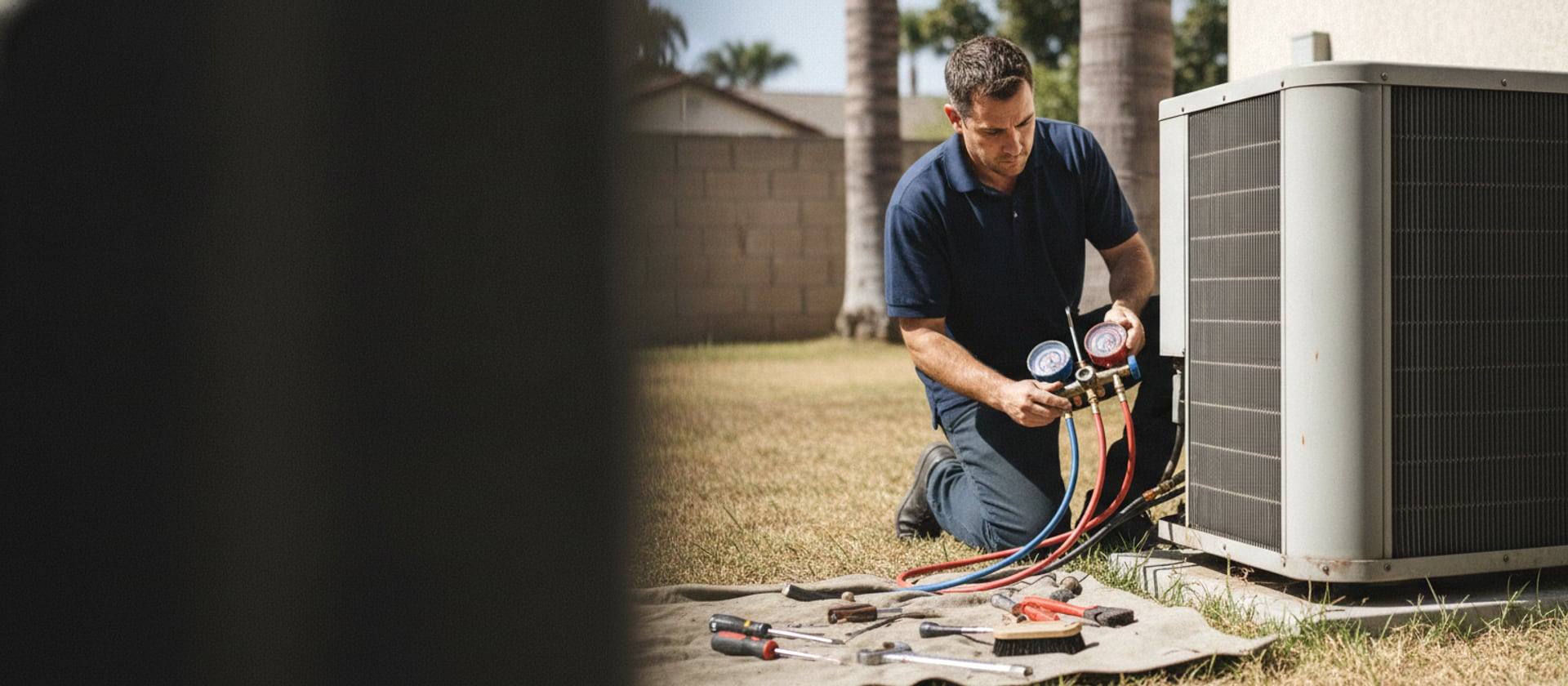
Every October I get the same calls. The pilot light that will not stay lit on the 1996 Lennox in Pasadena. The flame sensor in Sherman Oaks fouled to the point that the furnace ignites for 28 seconds and shuts back down. The first-fire stink in Whittier that the homeowner thinks is gas. The rat's nest packed into the burner tray of an attic furnace in Eagle Rock, that one I have seen at least a dozen times, and the smell when it lights for the first time is unforgettable. Spider webs across burners. Dust ignition flares. Cracked igniters. A condensate trap on a 96 AFUE in Diamond Bar that evaporated dry over the summer and is now siphoning flue gas backward into the cabinet.
Fall furnace maintenance is the reason January is mostly quiet for us. The shops that do not run fall maintenance plans get crushed in the second week of November, when the first 45°F night hits and every homeowner in the basin discovers their heat does not work at the same hour. The shops that do run fall plans look at their book in mid-November and see it filled with scheduled visits, not panicked no-heat dispatches. After enough seasons of this, you stop thinking of furnace work as winter work. The work is in October. November is just whether you did it or not.
What 305 idle days actually do to a SoCal furnace
This is the part that surprises homeowners. A furnace in Minneapolis runs every day from October through April and rarely sits long enough for problems to develop in the cabinet. A furnace in LA might run 60 nights a year. The other 305 days, the cabinet is a dark, dusty, room-temperature box that nothing visits except spiders and (depending on your attic situation) rodents. Things happen in there:
- Rodent nesting in the burner area, vent connector, or air handler. If you have an attic furnace, assume it is happening unless you have evidence otherwise. We pull material off burner assemblies every November, sometimes a small nest, occasionally a dead mouse, once a partially-shed snake skin in Altadena.
- Dust accumulation on heat exchanger surfaces and burner ports. First-fire ignition burns this off as smoke and odor, which homeowners regularly mistake for a gas leak or CO event.
- Condensate trap evaporation on high-efficiency 90%+ AFUE units. The dry trap stops doing its job, and the inducer pulls flue gas backward into the cabinet on first run.
- Thermocouple corrosion on the still-common standing-pilot units in older housing stock. Thermocouples that were marginal in April are dead in November.
- Bearing dry-out on blower and inducer motors. Bearings that have not seen movement in 8 months are loud on first start and have lost some service life permanently.
None of this is hypothetical. It is what is in the cabinet when we open it in October.
The failures we see in the second week of November
If you have ever wondered why the no-heat call queue suddenly stretches to six hours during the first cold snap, this is the list:
- Pilot will not stay lit. Thermocouple or thermopile failure usually, occasionally a clogged pilot orifice. (See pilot light troubleshooting.)
- Ignites for 30–90 seconds, then drops out. Flame sensor fouled by summer dust. The single most preventable fall failure on hot-surface-igniter furnaces, and we clean it on every visit.
- Blower runs, no heat. Gas valve, igniter, control board, or thermostat. (See furnace blowing cold air.)
- Short cycling. Clogged filter (most common), oversized furnace, fouled flame sensor, weak limit switch, blocked vent. (See furnace short cycling.)
- CO alarm trips when the furnace runs. Stop using the furnace until inspected. Do not "test" it again to confirm.
The 12-point checklist, in the order we run it
- Cabinet inspection. Rust, soot, scorch marks, rodent evidence.
- Filter pull. Photographed if it is bad. Always replaced before we leave.
- Burner clean. Pull the burners, brush ports, vacuum the burner box, re-seat. 15–20 minutes that prevents the bulk of November ignition failures.
- Heat exchanger inspection. Visual and, where access is constrained, borescope. Looking for cracks, pinholes, scorch.
- Flame sensor. Light abrasive on the flame rod, never sandpaper. The number-one preventable fall failure.
- Hot-surface igniter. Resistance check, visual hairline cracks.
- Manifold gas pressure verified against manufacturer spec on a manometer.
- Vent / flue. Obstructions, corrosion, draft, joint integrity. Bird nests in B-vent caps are common in canyon properties.
- Condensate trap and drain on 90%+ AFUE units. Trap primed, drain clear, neutralizer cartridge if equipped.
- Blower motor amp draw against nameplate. Lubrication on the older motors that still take it.
- Thermostat verification.
- Combustion analysis. CO ppm, O2, CO2, stack temperature. The only objective measure of safe combustion. Everything else is a proxy.
Carbon monoxide — the part that is not negotiable
Every gas furnace produces CO as a normal combustion byproduct. In a healthy system, all of it goes up the flue. CO becomes a household problem when the heat exchanger cracks, the vent backdrafts, or the burner falls out of adjustment. None of those are detectable by smell. All three are catchable on inspection.
What happens on every gas-furnace visit, no exceptions:
- Combustion analyzer at the flue. Anything above 100 ppm air-free CO is an immediate-shutdown condition. I have shut down two furnaces this season for that reason; both homeowners thought their unit was running fine.
- Heat exchanger inspection. Borescope on anything 15+ years old. A confirmed crack means the furnace is condemned, period: replacement, not repair.
- Draft test at the draft hood with a smoke pencil to confirm the flue is pulling.
- Spillage test with kitchen and bath exhaust fans running. Modern tight homes can pull a flue backward; this catches it.
- CO alarm verification in the dwelling. California Health & Safety Code §17926 requires it; we will not leave without recommending one at hardware-store cost ($25–$60) if there is not one.
What the heat exchanger inspection actually looks for
The heat exchanger is the metal partition that keeps combustion gas separate from the air your blower is pushing through the house. A crack or pinhole lets that gas (including CO) into the supply air. I have a borescope photo from a 2003 Carrier in La Crescenta that shows a hairline crack about the width of a hair and three inches long, on the inside surface of the primary heat exchanger. Homeowner had no symptoms, no CO alarm, no visible scorching outside the cabinet. The unit was ten months from being a fatal problem.
Visual cues to watch for between professional visits: scorch marks outside the cabinet, soot at the vent collar, flame disturbance when the blower starts (the flame should not waver), and any CO alarm that triggers only when the furnace runs. A confirmed crack is non-repairable. The unit is done.
Why we pull the burners every single time
Burner cleaning is the step that gets skipped on cheap tune-ups, and it is the step that prevents the most failures. Across one off-season, dust and biological matter accumulate on the burner ports even with a clean filter. Partial blockages produce uneven flame, yellow tipping (incomplete combustion = elevated CO), and rollout that scorches the cabinet. We pull, brush, vacuum, and re-seat. 15–20 minutes. Prevents roughly 80% of the November ignition-system failures we would otherwise be running.
Winter filter strategy
Same filter does both AC and heat in most homes, so cadence does not change, every 60–90 days, faster with pets or allergies. Two SoCal-specific notes:
- Always start heating season with a fresh filter. A loaded summer filter is the leading cause of the "furnace blowing cold air" complaint in November: the limit switch trips on overheat because static pressure is too high.
- Fire-season filter logic. Fall is wildfire season here. If your system ran through heavy smoke days, replace the filter regardless of where you are in the cycle. Full filter guide: AC filter replacement.
The shoulder-season thermostat fight
SoCal mid-October through November runs 75°F afternoons and 50°F mornings. Auto-changeover thermostats with a deadband under 5°F end up running both AC and heat in the same 24-hour cycle, which is wasteful and hard on equipment. Set heat to 65°F, cool to 75°F (10°F deadband). For winter overall: 68°F when home and awake, 60–62°F sleeping or away. Smart thermostats with geofencing handle this without you thinking about it. See thermostat troubleshooting if yours is acting up before winter.
When the answer is "stop maintaining, replace"
Honest opinion from someone who would rather sell you a tune-up than a furnace, because the tune-up is what brings you back next October: there is a point where maintenance is throwing money at a unit that is going to die anyway. The triggers:
- Heat exchanger crack confirmed. Non-negotiable.
- 18+ years old plus a major component failure (inducer, gas valve, control board) at $480–$680.
- Repair cost exceeds 50% of replacement.
- Pre-1992 standing-pilot unit. 65–72% AFUE is real money on the gas bill and parts are scarce.
- Multiple repairs across two seasons. The system is telling you.
Replacement is also when the heat-pump conversation makes the most sense. TECH Clean California rebates pay $3,000–$8,000 to swap a gas furnace for a heat pump, and SoCal's heating climate is genuinely ideal for it. See TECH rebates guide and furnace replacement cost.
What's overhyped on furnace tune-ups
Push-back, since the trade does sell things that do not need selling.
- Annual duct cleaning bundled with the tune-up. Skip unless there is documented contamination. Most pitches are upsells.
- Gas-line "leak insurance" warranties. SoCalGas already covers utility-side leaks. Past the meter, a properly installed line does not develop leaks. The warranty is mostly fee revenue.
- Annual full chemical coil cleans on furnaces that share a coil with a tuned-up AC. The spring AC visit covered this; the fall visit does not need to repeat it.
Real cost ranges
- $89–$129 basic: 45–60 minutes, light checklist, filter, flame sensor.
- $159–$189 comprehensive: 75–110 minutes, full 12-point above, combustion analysis, written report.
- $189–$279 annual plan: Spring AC + fall furnace, priority dispatch, 10–15% off repairs.
Fixed-price quote on the work order before any panel comes off. No surprises. For how these furnace tiers compare against AC and combined-system pricing in the LA market, see the full LA tune-up price teardown.
Call Venta Heating and Cooling at (424) 766-1020 for a comprehensive 12-point fall furnace tune-up, including combustion analysis and CO safety check. CSLB #1138898 (C-20). See our maintenance plans.