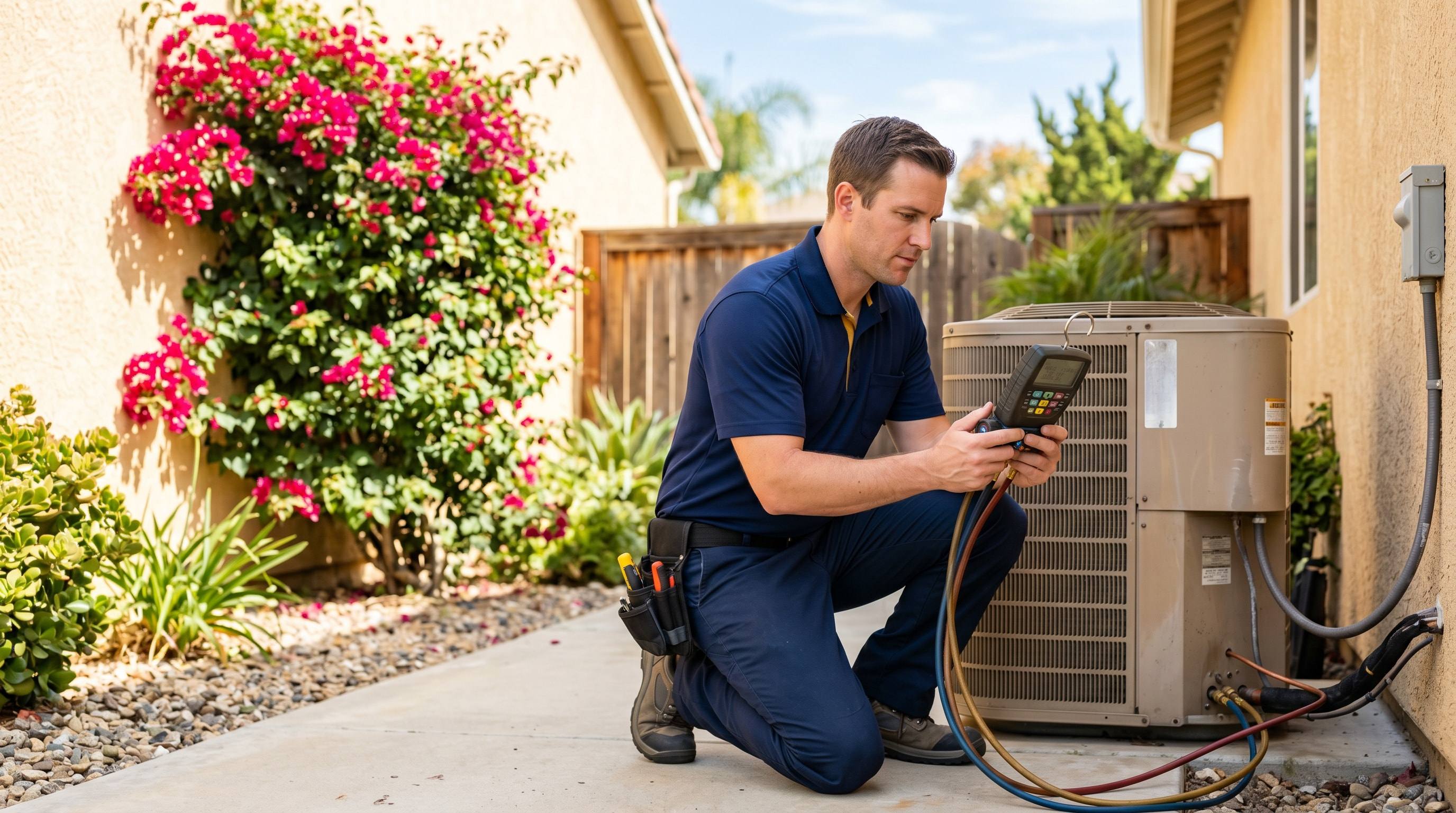
This is the failure-mode companion to our main AC repair service. Use the sound to find the likely cause — each one links to the specific repair.
Match the noise to the cause
- Loud hum / buzz, fan not spinning → failed capacitor (most common). Shut it off — the compressor is overheating. See fan not spinning. $185–$295.
- Rhythmic clicking / chattering at startup → contactor. $165–$285.
- Grinding / squealing from the outdoor unit → worn condenser fan-motor bearing. $485–$795 PSC.
- Hard knocking / banging from the compressor → possible internal compressor wear. See compressor replacement.
- Hissing / bubbling / screaming → refrigerant leak or high pressure. Stop using it.
- Metallic rattling / clanging → loose hardware or debris hitting the fan blade.
Which noises mean shut it off now
Turn the system off at the breaker immediately for: a loud hum with a stalled fan (overheating compressor), a hard knocking or grinding from the compressor or fan motor, a burning-electrical smell, or a screaming/hissing suggesting high pressure or escaping refrigerant. A mild rattle or a buzzing contactor is less urgent but still worth a prompt look. The rule of thumb: a stalled-fan hum or a grinding bearing left running turns a cheap repair into a compressor or motor replacement. The broader sound-by-sound reference is in our HVAC strange noises guide.
The expensive-vs-cheap noises
Most AC noises are inexpensive fixes: a buzzing capacitor ($185–$295) or a chattering contactor ($165–$285) are the two most common and both are same-day. The pricier ones are a grinding fan motor ($485–$795) and anything involving the compressor or refrigerant circuit. Hissing is the one to respect most — it usually means a refrigerant leak, which is both a stop-using-it issue and EPA-regulated work, not a DIY fix. We confirm every diagnosis on the meter before quoting.
Why SoCal units get noisy
Inland, in Rancho Cucamonga, Fontana, and Riverside, capacitors and motors run hard through 100°F-plus afternoons, so heat-stressed capacitors (buzzing) and worn fan bearings (grinding) show up by year 8–12. On the coast in Santa Monica, Manhattan Beach, and Malibu, salt air corrodes bearings and contactor contacts, producing grinding and chattering earlier, year 5–8. SoCal condensers also sit in yards that collect leaves, seeds, and rodent nests, which cause rattles and blade strikes. An annual spring tune-up catches the wear noises before they become failures.
What you can safely check
With the power off at the breaker, you can clear leaves and debris from around and inside the top grille — a common rattle source — and confirm the unit sits level on its pad. Everything past that (capacitor, contactor, fan motor, compressor, refrigerant) is high-voltage or refrigerant work for a licensed technician; the capacitor alone can hold a lethal charge with the power off. We take it from there.
Noise repair pricing
| Likely part | Typical cost |
| Diagnostic (waived with repair) | $89 / $149 after-hours |
| Dual-run capacitor (hum/buzz) | $185–$295 |
| Contactor (clicking/chattering) | $165–$285 |
| Condenser fan motor (grinding/squeal) | $485–$795 |
| Refrigerant leak detection (hissing) | $245–$485 |
| Compressor (knocking — we quote replacement) | $2,400–$4,200 |
Every major brand
Noises trace to the same parts on every brand — Carrier, Trane, Lennox, Rheem, Goodman, Daikin, and York AC not cooling.
Frequently asked questions
Why is my AC making a loud noise? +
The sound tells you the cause. A loud hum or buzz with the fan not spinning is usually a failed capacitor. A rhythmic clicking or chattering on startup is often the contactor. A grinding or squealing from the outdoor unit is typically a worn fan-motor bearing. A loud metallic clanging or rattling is a loose part or debris hitting the fan blade. A hissing or bubbling points at a refrigerant leak. A hard knocking from the compressor can mean internal wear. Some of these are cheap fixes and one or two are stop-using-it calls — we identify which by the sound and confirm on the meter.
Is a loud AC noise dangerous — should I turn it off? +
Some noises mean shut it off now; others can wait for a scheduled visit. Turn it off immediately for: a loud hum with a stalled fan (the compressor is overheating), a hard knocking or grinding from the compressor or fan motor, a burning-electrical smell, or a screaming/hissing that suggests high pressure or a refrigerant leak. A mild rattle or a buzzing contactor is less urgent but still worth a prompt look. When in doubt, shut it off at the breaker — a stalled-fan hum or a grinding bearing left running can turn a small repair into a compressor or motor replacement.
Why is my outdoor AC unit screaming or hissing? +
A high-pitched screaming or a hissing/bubbling sound usually involves the refrigerant circuit, and it is a stop-using-it situation. Hissing often means refrigerant escaping from a leak; a loud screaming can indicate dangerously high internal pressure. Both warrant shutting the system off and calling rather than running it. Refrigerant work also requires EPA-regulated handling, so this is not a DIY fix. We locate the leak with electronic and UV-dye detection and check pressures before any repair. More detail on our refrigerant-leak page.
Why is my AC buzzing or humming but not starting? +
A buzzing or humming outdoor unit that will not actually start is the classic failed-capacitor signature, sometimes paired with a contactor that is chattering. The capacitor supplies the starting torque; without it the motor sits and hums. Because a humming compressor with a stalled fan overheats quickly, shut the unit off and call. A dual-run capacitor replacement runs $185–$295 and a contactor $165–$285 — both inexpensive, same-day fixes. We confirm which with a meter rather than swapping parts on a guess.
Why is my AC grinding or squealing? +
Grinding and squealing from the outdoor unit usually point at the condenser fan motor — specifically worn bearings that are metal-on-metal or close to it. A squeal can also be a belt on older or commercial equipment, though most modern residential units are direct-drive. Indoors, a squeal can be the blower motor. A grinding bearing left to run will seize and can take out the motor, so it is worth addressing before it fails entirely. A PSC condenser fan motor runs $485–$795. We confirm with an amp-draw and bearing check.
Why do AC units get noisy in Southern California specifically? +
Two regional patterns. Inland, in the Inland Empire heat, capacitors and motors run hard through 100°F-plus afternoons, so heat-stressed capacitors (buzzing) and worn fan bearings (grinding) are common by year 8–12. On the coast — Santa Monica, Manhattan Beach, Malibu — salt air corrodes bearings and contactor contacts, producing grinding and chattering earlier, year 5–8. SoCal units also sit in yards that collect leaves, seeds, and the occasional rodent nest, which causes rattles and blade strikes. A yearly tune-up catches the wear noises before they become failures.
Can I fix a noisy AC myself? +
You can safely do the easy, non-electrical checks: with the power off at the breaker, clear leaves and debris from around and inside the top grille (a common rattle source) and make sure the unit is sitting level on its pad. Beyond that, the parts behind AC noises — capacitor, contactor, fan motor, compressor, refrigerant circuit — are high-voltage or refrigerant work that should be diagnosed and repaired by a licensed technician. The capacitor alone can hold a lethal charge with the power off. We identify the noise, confirm the part on the meter, and fix it.